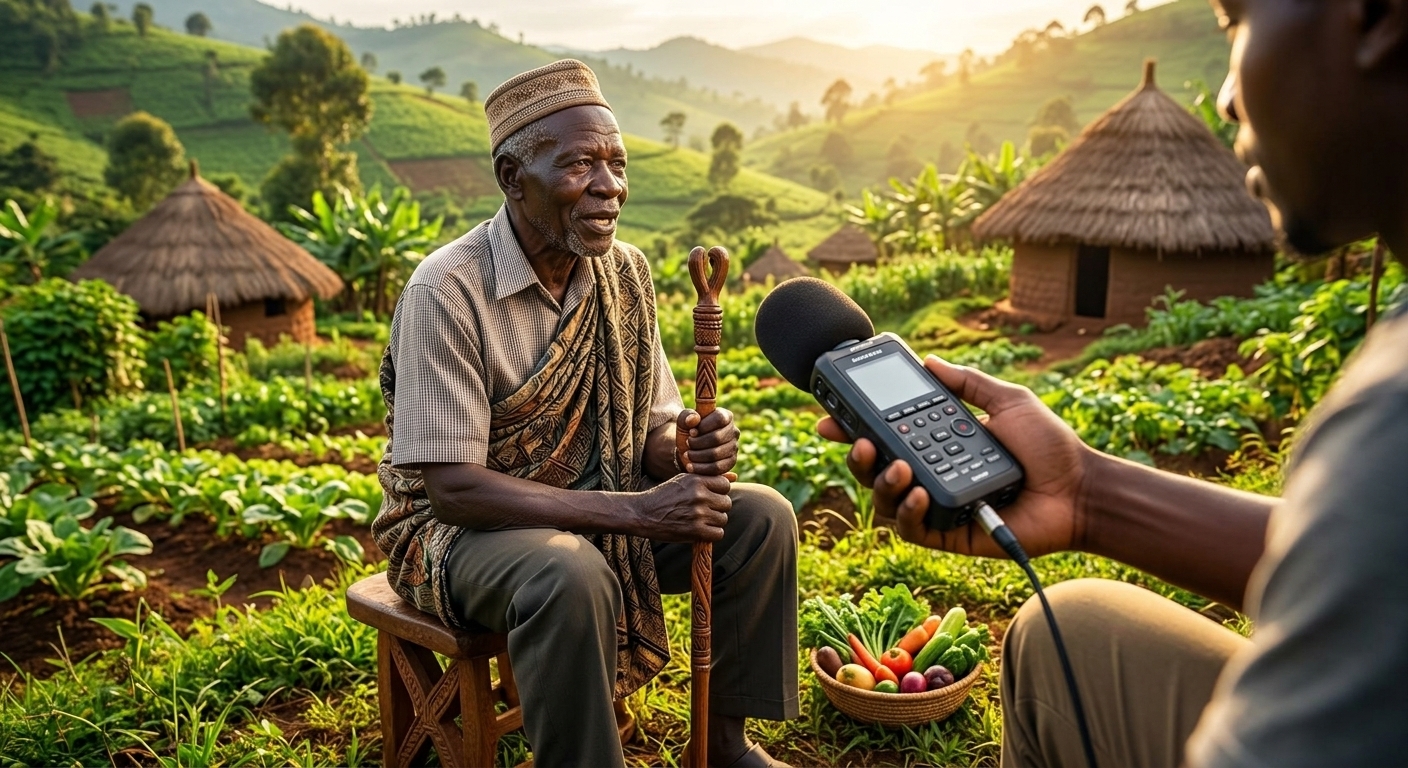
The Tachoni initiate in August of every even year. This August, at Ndivisi, the Trust recorded a season in full for the first time — forty-eight minutes of it now sits in the archive as accession TA-2026-0014. The next cycle is August 2028.
Why now and not later
The men who can explain what each part of the season means, in the words it was always explained in, are in their eighties and nineties. Some of them were initiated before independence. When we say this work is urgent we do not mean it rhetorically: a language is not lost in a decade, it is lost in a funeral.
Waiting for 2028 would have cost us two years of that. Waiting for the site to be finished would have cost the same. So the camera went out before the website did.
What was recorded, and what was not
The season carries the bird hunt, the feeding of the candidates, the elders’ instruction, and the naming of the new age-set into the rotating sequence — Vakolongolo, Vakikwameti, Vakananachi and the others.
Not all of it is for publication, and the archive respects that absolutely. The Trust records what the families and the presiding elders agree may be recorded, and nothing else. Where an elder said a thing was not to be filmed, it was not filmed. Where a family later asks for something to be withdrawn, it will be.
That restraint is not a limitation on the archive. It is the reason the archive will be allowed to exist at all.
How a recording enters the archive
- The family first. Never the elder cold, and never without the family’s agreement.
- We travel to them. They do not travel to us. Usually a morning, sometimes several visits.
- Consent on paper, and a copy for them. Along with the recording and the transcript. Always.
- An accession number. TA-YYYY-NNNN, permanent, so a researcher or a grandchild can cite it in a hundred years.
- Rights stay with the speaker. The Trust holds and maintains. It does not own.
Six accessions so far
Alongside the Ndivisi season: songs of the initiates recorded at Bokoli, family testimony on the Chetambe siege, a migration account from Matulo that differs from three others we hold, the naming of the Abangachi, and a set of planting songs that was the archive’s very first entry.
Where accounts differ — and on origins they routinely do — we keep all of them, each attributed. We are building a record, not settling an argument, and a record that flattens disagreement is not a record.
You probably know someone
The single most useful thing anyone can send this Trust is a name. Not a famous person. An old one, and a willing one: someone who can give their clan’s origin account in their own words, who was initiated before independence, or who still uses words the young no longer use.
You do not need a camera or any training. You need to know who the old people are.
Archive references. TA-2026-0014 (Ndivisi season, video, 48 min), TA-2026-0012 (songs of the initiates, Bokoli), TA-2026-0009 (Chetambe testimony), TA-2026-0007 (migration account, Matulo), TA-2026-0003 (naming of the Abangachi), TA-2026-0001 (planting songs). Recordings are not yet published to this site; each needs its consent form filed and its transcript checked first.